The evolving dynamics between India and the administration of US President Donald Trump have attracted significant attention from Chinese media, with narratives suggesting that New Delhi is anxious about managing its relationship with Washington.
Some Chinese commentaries say that India’s diplomatic efforts are driven by attempts to not ruffle the Trump administration’s feathers, even asserting that Indian Prime Minister Narendra Modi faced diplomatic setbacks during his recent US visit — developments they say can and should lead India to restore ties with China. However, such interpretations overlook India’s broader strategic calculations.
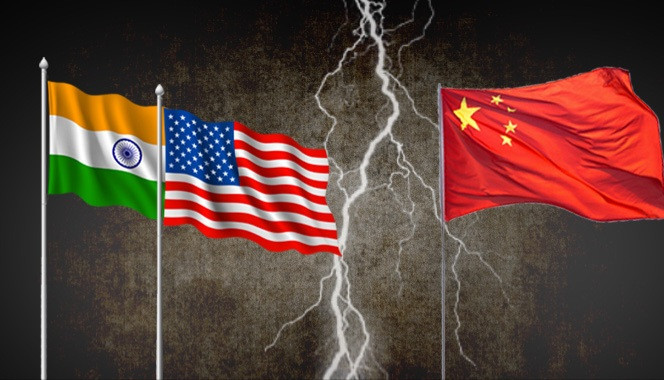
China views the deepening India-US ties as a response to its assertive moves, particularly in the Indo-Pacific region and along disputed borders. With Trump’s return to the White House, Beijing’s concerns over New Delhi’s strategic positioning have only intensified.
Unlike his first term, where China was a primary target of his economic policies, Trump’s second term appears to have sharpened the attack on China while reinforcing India’s role as a key partner in Washington’s Indo-Pacific strategy.
India’s engagement with the US has evolved beyond a reactionary counterweight to China, with New Delhi skillfully positioning itself as a key player in regional security and economic frameworks, leveraging its ability to negotiate trade and defense partnerships while maintaining strategic autonomy.
The US has responded by acknowledging India’s role beyond mere counterbalancing, increasingly viewing it as an indispensable partner in technology, defense, and trade and economic partnerships.
Chinese media assertion that tensions exist in the India-US relationship, such as trade disputes and immigration, but these do not undermine the broader trajectory of the relationship.
Rather than weakening the partnership, the challenges underscore India’s agency. Chinese analysts say that the US values India as a strategic counter to China rather than a genuine ally, but this underestimates the multi-faceted relationship.
India’s flexible approach to Trump’s insistence on tariff reduction is beginning to pay off, with both sides on the verge of a bilateral free-trade agreement — showing New Dehli’s ease in navigating US ties and the strategic importance it places on the relationship.
Chinese analysts frequently overlook India’s commitment to strategic autonomy. New Delhi’s foreign policy does not rely solely on alignment with the US, but also involves parallel engagements with other major global players, including Russia and the EU. While border tensions with China have undeniably shaped India’s strategic recalibrations, those adjustments are driven by long-term strategic imperatives rather than immediate diplomatic pressures.
Beijing’s skepticism about the depth of India-US ties reflects its anxieties, but India-US cooperation extends beyond geopolitics.
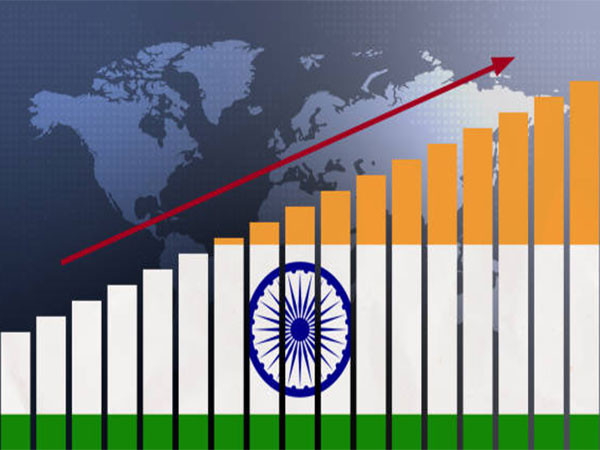
Economically, India’s growing trade with the US — surpassing US$190 billion in 2023 — underscores its increasing global economic influence, whereas its US$136 billion trade with China, despite being substantial, is overshadowed by a significant deficit that exacerbates its economic vulnerabilities vis-a-vis Beijing.
That imbalance reinforces India’s strategic push for supply chain diversification, and greater technological collaboration with the US and its allies in sectors such as semiconductors and defense manufacturing.
Security cooperation between India and the US has also expanded, with agreements on joint military exercises, technology sharing and fighter jet engine codevelopment.
Those highlight India’s shifting defense strategy, which increasingly prioritizes diversified partnerships over dependencies.
While China remains a significant variable in India-US relations, it does not singularly define them.
Contrary to Beijing’s assumptions, New Delhi’s foreign policy is driven neither by transient US political shifts nor external pressure from China, but by its own strategic vision as a pivotal global player — balancing competition and cooperation in a manner that safeguards its national interests.
As geopolitical realities evolve, India’s trajectory would be shaped not by reactive diplomacy, but by proactive, strategic engagements with multiple global stakeholders.