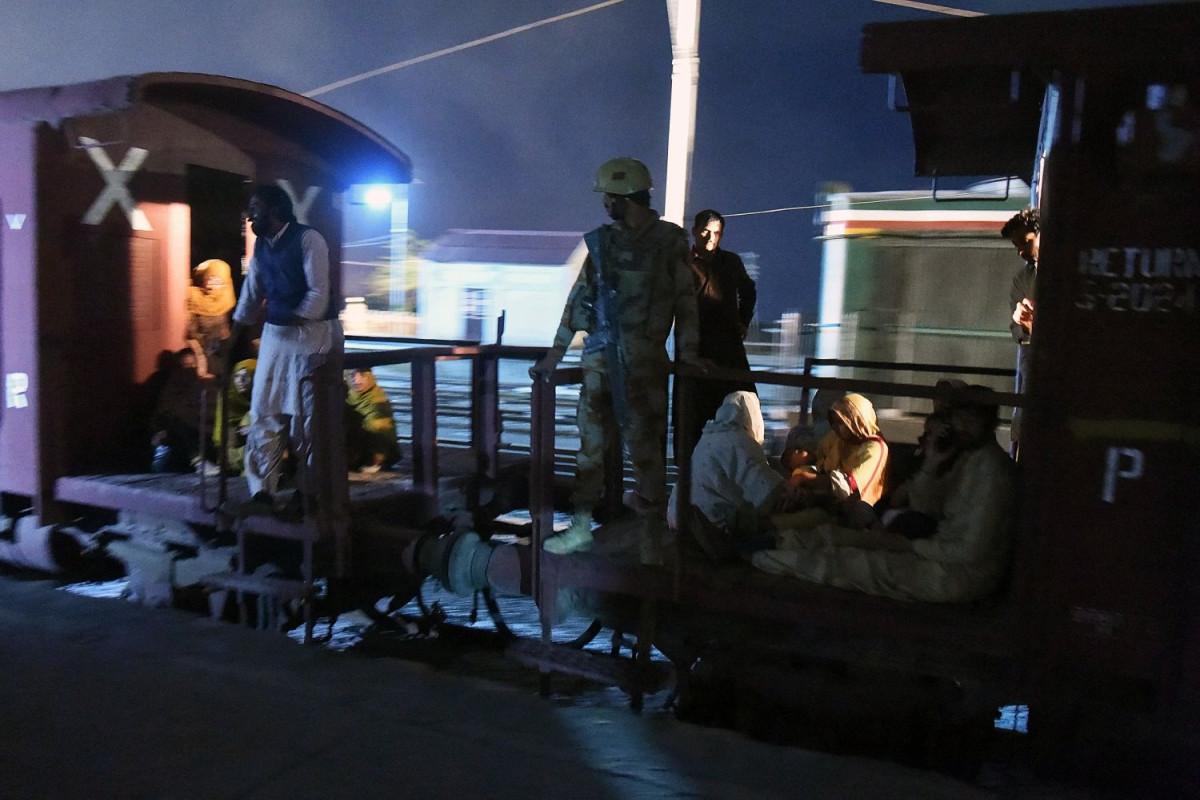
The recent hijacking of the Jaffar Express train in Balochistan’s Bolan region underscores long-standing concerns about security, governance, and development disparities in Pakistan’s largest province. The attack, carried out by the Baloch Liberation Army (BLA) on March 11, 2025, has once again brought international attention to the decades-old Balochistan conflict, which remains a point of contention in Pakistani politics. While Pakistani authorities labeled the attack an act of terrorism, it also highlights grievances that have persisted for generations. Balochistan, despite being rich in natural resources such as natural gas, coal, gold, and copper, remains Pakistan’s least developed province. The economic and social disparity between Balochistan and other parts of the country continues to fuel local frustrations, as communities struggle with infrastructure deficiencies, poor governance, and lack of access to essential services.
Balochistan continues to lag behind in education, healthcare, and infrastructure compared to other provinces. According to the Pakistan Bureau of Statistics, the province has the lowest literacy rate, with figures estimated to be below 40 percent, compared to the national average of around 60 percent. Schools in many districts lack basic facilities, qualified teachers, and infrastructure, forcing students to travel long distances to access education. Similarly, healthcare services remain underfunded. The doctor-to-patient ratio in Balochistan is one of the lowest in the country, with many rural districts lacking functioning hospitals. Maternal mortality rates remain high, and in medical emergencies, patients often travel hundreds of kilometers to Quetta for treatment due to inadequate local healthcare facilities.
Access to clean water has also been a persistent issue, particularly in Gwadar, which is considered a key hub under the China-Pakistan Economic Corridor (CPEC). Despite numerous government pledges, desalination plants remain non-operational. Reports indicate that equipment provided by China for 150 water filtration plants remains uninstalled, raising concerns about administrative inefficiencies in addressing this crisis.
One of the most striking contradictions in Balochistan’s economic situation is the lack of access to natural gas, a resource the province contributes significantly to the national supply. While Balochistan provides natural gas to the rest of Pakistan, many of its own communities remain without gas connections. Similarly, Gwadar, a city central to CPEC’s development goals, still relies on imported electricity from Iran, despite Pakistan experiencing electricity surpluses. During the 78th CPEC progress review meeting, officials expressed concerns over delays in connecting Gwadar to the national grid, an issue that persists despite more than a decade of CPEC projects. Many local communities remain skeptical of CPEC, viewing it as a means for resource extraction rather than a driver of regional development.
Pakistan has largely approached the Balochistan insurgency through a military-centric strategy. Following the Jaffar Express hijacking, the government launched a security operation rather than engaging in negotiations. This pattern has been observed in previous incidents, such as the 2022 capture of Colonel Laeq Naik, with military actions often accompanied by allegations of human rights violations. Reports by international rights organizations have documented enforced disappearances, extrajudicial killings, and military crackdowns in Balochistan. The Inter-Services Public Relations (ISPR) statement about conducting a “sanitization operation” following the attack has raised concerns over potential civilian casualties. The lack of media access to affected areas has further complicated efforts to independently verify events.
The Jaffar Express incident produced conflicting accounts. Pakistani authorities claimed a successful operation, stating that all hostages were rescued and all militants were eliminated. However, the BLA issued a counter-statement, asserting that they had voluntarily freed the passengers. Testimonies from some passengers appeared to support this claim, highlighting the difficulty of verifying facts in the region due to limited press freedom. This information vacuum has led to competing narratives, with the Pakistani state emphasizing the military’s success, while Baloch groups highlight what they perceive as a struggle for rights and recognition.
Despite its geopolitical importance, Balochistan remains a low priority in international discourse. While conflicts in other regions frequently attract global attention and intervention, Balochistan’s issues are often framed solely as a domestic terrorism problem. This has allowed successive Pakistani governments to pursue a security-based approach without significant international pressure for political solutions.
The Jaffar Express attack is not just a security crisis; it reflects deeper governance challenges that must be addressed to achieve long-term stability in Balochistan. A sustainable solution requires more than military operations. It demands political engagement with Baloch leaders to address grievances, equitable resource distribution ensuring that Balochistan benefits from its natural wealth, investment in infrastructure, education, and healthcare to improve quality of life, and reforms to CPEC implementation to include local communities in development projects. Until these fundamental concerns are addressed, incidents like the Jaffar Express hijacking are likely to persist, underscoring the need for a holistic, development-driven approach rather than a purely military response.