Beijing’s hope has been dashed that in the course of her just concluded visit to China Prime Minister of Bangladesh Sk Hasina will firm up the deal for the so-called Teesta River Comprehensive Management and Restoration Project.
In fact, Beijing appears to be quite upset that Dhaka is negotiating with India over the Teesta project. During her visit to Beijing last week, China offered Sk Hasina a loan assistance package of only $100 million against its earlier promise of $5 billion. President of China Xi Jinping met the Bangladesh Prime Minister for only about half an hour, while Sk Hasina was expecting a longer meeting. In protest, Sk Hasina cut short her visit and returned to Dhaka a day earlier than scheduled.
A total of 21 memorandums of understanding have been signed between Bangladesh and China and seven projects to be set up in Bangladesh by China have been announced; but none too significant in nature. There is no mention of the Teesta project in the list.
According to reports appearing in newspapers in Dhaka, the only memorandum of understanding relating to river water signed between Bangladesh and China during Sk Hasina’s visit to Beijing was the renewal of a MoU on the provision of hydrological information of the river Brahmaputra in the flood season by China to Bangladesh. It is understood that Bangladesh has insisted on this MoU on the advice of India. New Delhi is worried that China is not transparent about hydrological information on the flow of Brahmaputra water on which the Indian plains of Assam are vitally dependent. China is keen to divert Brahmaputra water from Tibet, which is known there as Yarlung – Tsangpo, for industrial needs in the Chinese mainland. China is also setting up a giant hydro-electric project on river Brahmaputra in Tibet. The likely impact of such a project on the flow of water in Brahmaputra is still not known.
China has been trying to fish in troubled water and take advantage of the delay in the signing of the Teesta water sharing deal between India and Bangladesh because of the consistent refusal of West Bengal Chief Minister Mamata Banerjee to endorse any such deal. Her argument is that such a sharing of water will affect the interests of farmers in north Bengal.
The aim of Beijing is clear, to make room for Chinese presence in northern Bangladesh next to the vulnerable Siliguri corridor of India. Analysts say this will help China in the long-term strategies for its territorial ambitions. Sk Hasina being a friend of India, the Bangladesh government is unlikely to offer any such privilege to China,
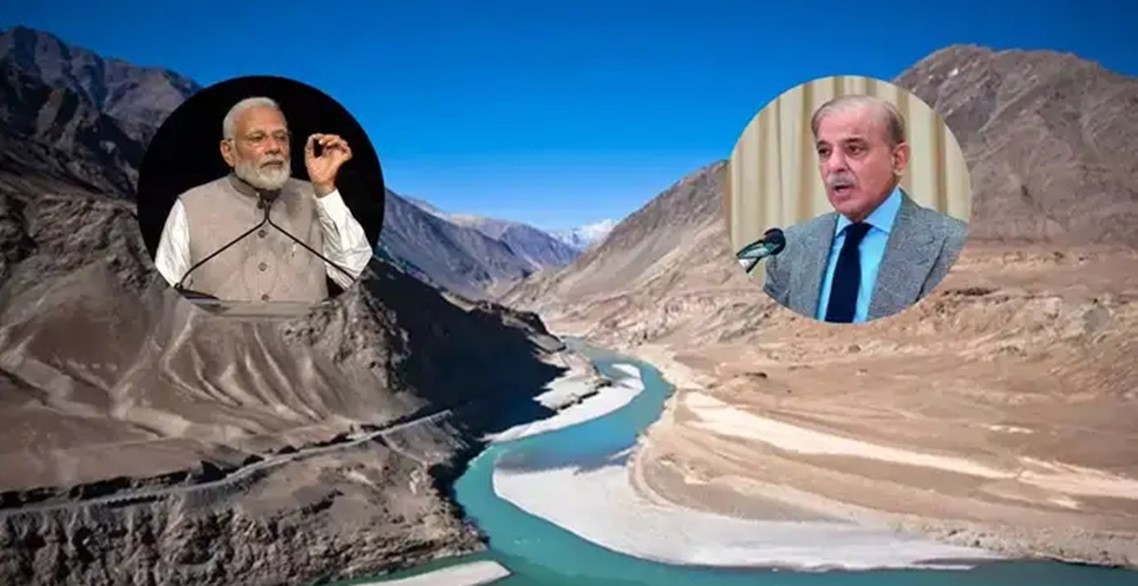
Now with India offering to set up a project for the construction of a reservoir for storage of Teesta water in northern Bangladesh, the ground situation facing Bangladesh has completely changed. A memorandum of understanding has already been signed between New Delhi and Dhaka for the setting up of such a project in the Teesta basin. India will soon send to Bangladesh a technical team to work out the details of the project.
Sk Hasina has said that between the Indian offer and the Chinese offer she will choose the one that is more beneficial in the interest of Bangladesh. But at the same time she has also made it clear that between the two she thinks that the Indian offer is preferable because the Indian government is in a position to arrange the flow of more water along the Teesta for Bangladesh.
China, on the other hand, has no control over the flow of water in river Teesta; which flows from India into Bangladesh. The flow of Teesta water in Bangladesh is controlled by the Gazaldoba barrage in north Bengal, close to the Bangladesh border. Without any assurance on the flow of Teesta water to Bangladesh, the project suggested by China is of little value; as experts have pointed out.
In any case, the Chinese offer is less about irrigation and flood control like the construction of a reservoir for the storage of the river water, excavation of canals to carry this water to farm lands and building of embankments along the river for flood control during the monsoon; and more about setting up power project and establishing settlements and other urbanization projects in the Teesta basin. Through such projects, China wants to extend its controversial Belt and Road Initiative in Bangladesh and snare Dhaka in a debt trap.
Experts in Bangladesh say Dhaka should not accept the Chinese proposal. “PowerChina drew up the billion dollar Teesta River Comprehensive Management and Restoration Project. From its name it is clear that PowerChina’s main work is power generation. It is not clear how far this company became an expert in the field of river management,” former chief of development research at UN Dr Nazrul Islam has written in an article in Prothom Alo English, published from Dhaka.
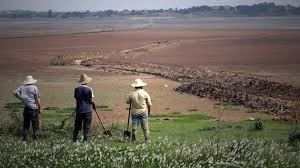
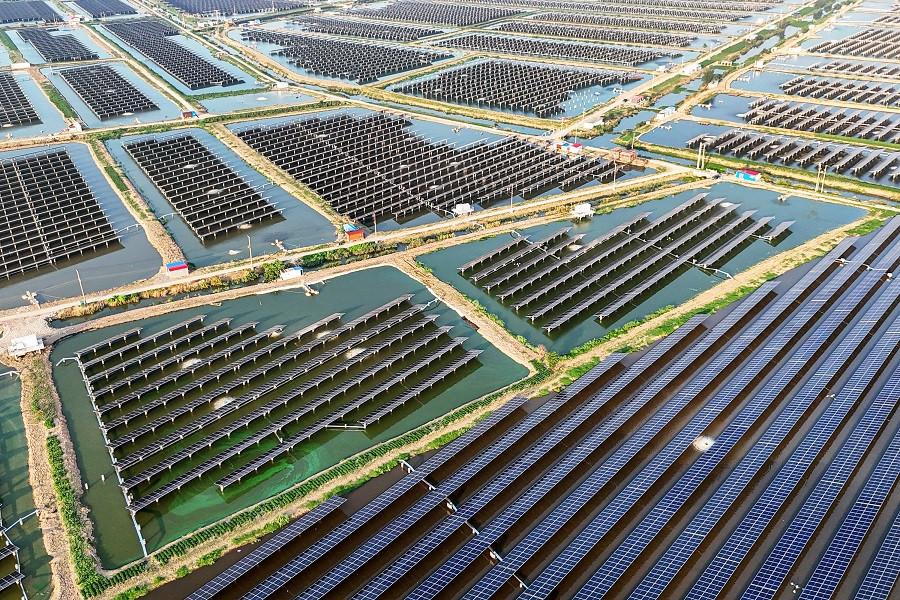
“The basic proposal of China’s project is to cut river Teesta’s average breadth of about three km to 0.816 metre; that is about one-fourth. By this around 171 sq km of land can be recovered and can be used for urbanization, the establishment of a solar power project, agriculture development and establishing settlements. By dredging, the depth of Teesta will be increased from the present five metres to 10 metres.”
Dr Nazrul Islam has described the Chinese offer as “disquieting.” He writes: “It is clear that if the river’s breadth is reduced to one-fourth, even if its depth is doubled, the river’s cross-section will be half and if the volume of its flow remains the same, the velocity of the flow will double. As a result, erosion in Teesta’s sandy river basin will intensify and the embankments on the river banks will not be able to withstand this. Around 50 million tonnes of silt flows in with river Teesta annually. So the increased depth of Teesta through dredging will soon decrease.” With its drastically narrowed breadth, the result will be flash floods during the monsoon.
It seems Beijing had already been apprehending that Dhaka might not show interest in the offer from China after the Indian offer regarding the Teesta project. In the wake of the Indian offer to send a technical team to Bangladesh to study the project, China had asserted that it was open to accept any decision Bangladesh took on the Teesta River Comprehensive Management and Restoration Project.
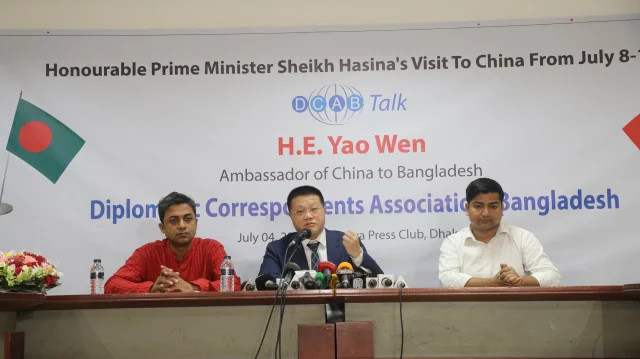
“The Teesta river is within the territory of Bangladesh. So it is your river. Any project regarding the Teesta river is for Bangladesh to decide upon. That decision must be respected by all of us,” Chinese Ambassador to Bangladesh Yao Wen told reporters at Jatiya Press Club in Dhaka earlier in July.