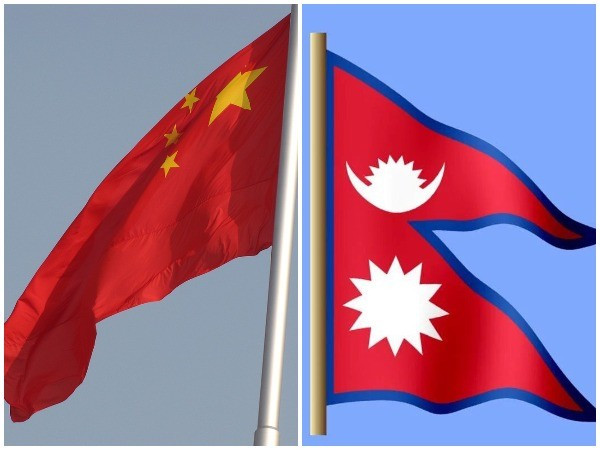
Kathmandu. Nepal-China relations is a complex situation with many moving parts that is experiencing tensions lately. A study by the Araniko project titled “Chinese Public Opinion on Nepalese Grant Proposal”published in September 20, 2024 pertains to how Nepal’s proposal for debt forgiveness from China had stirred up Chinese Internet Public Discourse.
The publication suggests that Chinese Netizens were very disapproving and critical of Nepalese requests to convert loans amounting to US $216 billion into grants which were provided by China to Nepal. The topic of Chinese public opinion on the Nepalese grant proposal has been quite active on social media and in public discussions. Many Chinese netizens have expressed frustration, using the phrase "Hòu wàng bāo lái" which means "give generously, receive little".
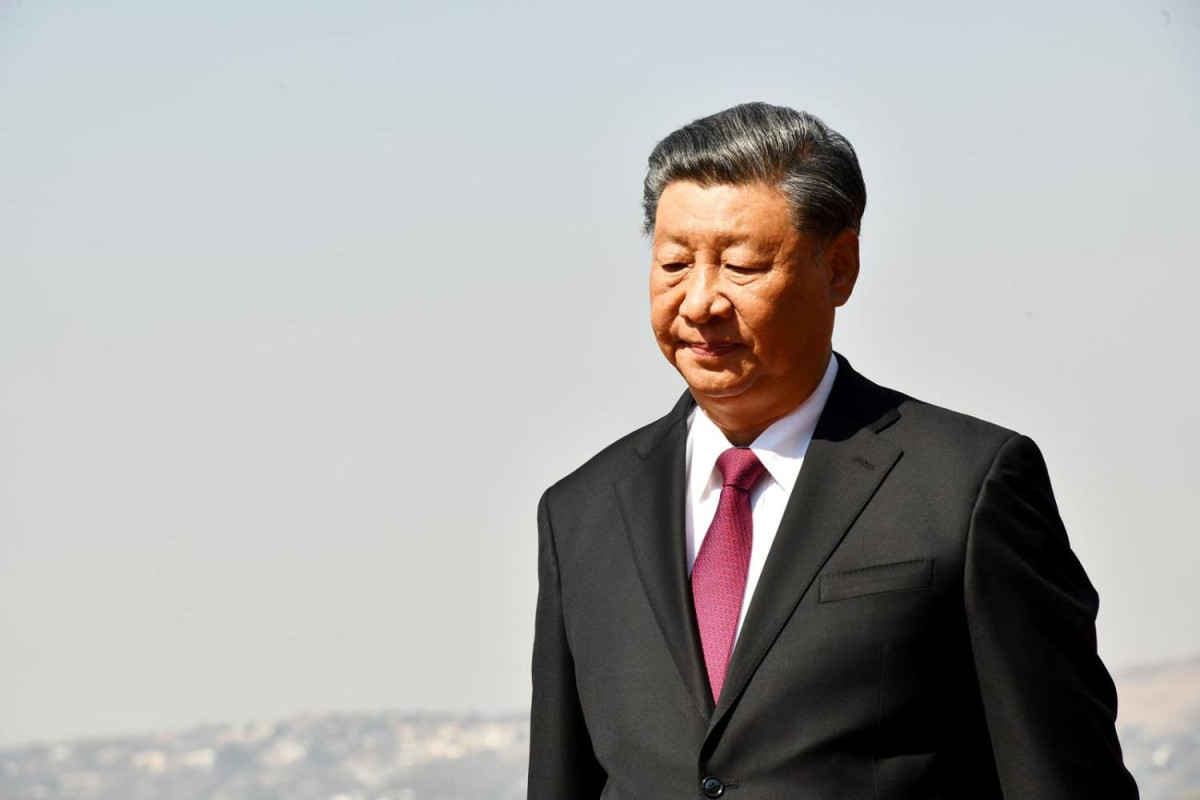
This sentiment reflects a sense of disappointment with Nepal's political instability and perceived reluctance to repay debts. Almost a decade after President Xi Jinping introduced the Belt and Road Initiative (BRI), he announced three initiatives over the last three years. Beijing announced the Global Development Initiative (GDI) in 2021, Global Security Initiative (GSI) in 2022, and Global Civilization Initiative (GCI) in 2023 for engagement, but on Beijing’s terms.
These initiatives make lofty claims about “achieving common sustainable development” and “eliminating the root causes of international conflicts” but fall short of offering substantial forms of financial support, technical assistance, or capacity-building initiatives. Nepal desperately wanted to be a part of the BRI. As a result, China added the Trans-Himalayan Multi-Dimensional Connectivity Network to its BRI plans.
The two nations signed the BRI agreement in 2017. Nepal leaders have sold the proposed rail network crisscrossing the Himalayas as Nepal’s ticket to end its complete dependence on India. However, there has been little development in implementing the BRI in Nepal since. For Nepal, Chinese initiatives pose opportunities and risks. As China offers loans under the BRI at a higher interest rate with a short payback period, the Nepali side has not been quite keen.
Nepali side has conveyed that it wants more grants from China than loans, insisting that even if a loan had to be taken, it should be a “soft loan” or “concessional loan”, which comes at a minimal interest rate. Nepal’s concerns regarding loans stem from potential debt fears. Experts say Nepal’s debt concerns are justified and that it must tread carefully when it comes to accepting foreign commercial loans, given the country’s growing debt to gross domestic product (GDP) ratio in recent years.
Under BRI, a proposal for concessional funding had been submitted to the Ministry of Finance to provide a concessional loan to Nepal up to $ 1 billion at 3 percent rate of interest. However, not much was known about the funding modality of the BRI projects. When Nepal signed the BRI agreement in 2017, it was touted as a watershed moment in Nepal-China ties.
But with not a single project taking off under the Chinese programme, there were doubts if Nepal was itself reluctant to undertake these projects for geopolitical reasons. When the Chinese Foreign Minister Wang Yi was in Kathmandu in March 2019, the Nepali side proposed developing the Madan Bhandari University under the BRI. That was the only project the Nepali side had proposed for development under the BRI, but due to several reasons, it is in limbo.
After the Covid pandemic hit China, other projects were also affected. Beijing is frustrated with Nepal’s lack of progress on BRI projects. It has become a primary Chinese concern. The Chinese government has grilled every visiting Nepali delegation about progress on the BRI, and the Chinese embassy in Kathmandu has pressed Nepali leaders. At the same time, China has invited Nepal thrice and put pressure on it to join the GSI.
However, Nepal has resisted the calls owing to its constitution-mandated policy of non-alignment. Nepal is studying Beijing’s invitation to be a part of the GCI. Beijing is keen to show that Nepal is progressing in the Beijing-led initiatives. Chinese ambassador to Nepal Chen Song claimed that Pokhara International Airport, built with Chinese aid and by a Chinese company, was a part of the BRI. Nepali Foreign Minister Narayan Saud clarified that “not a single project in Nepal under the BRI has been executed.
He mentioned that the project implementation plan is still under discussion and has not yet been finalised. Another issue for rising tensions is related to Nepal's growing engagement with other countries, particularly the United States. The United States has presented an alternative vision through initiatives such as the Millennium Challenge Corporation (MCC), which serves as an alternative to China’s multi-billion-dollar Belt and Road Initiative (BRI) projects in Nepal.
Given the tense geostrategic and security environment in the Himalayas, China has viewed the growing role of the United States as a development partner for Nepal as a potential threat to China’s presence in the region. China perceives any external efforts to fortify ties with Nepal as a direct challenge to its regional dominance, raising concerns about potential shifts in the delicate balance of power. Chinese public opinion often highlights the need for Nepal to be more proactive and committed to the agreements made with China.
There's also a preference for Nepal to accept loans on commercial terms, which has led to disagreements and further complicated the relationship between the two countries. There's also been some diplomatic tension, with China's Ambassador to Nepal, Chen Song, making comments that have been perceived as insensitive and intrusive in Nepal's domestic affairs. Chen kicked up a controversy targeting a local journalist who criticised China's loan policy for Nepal.
Chen demanded a public apology from local journalist Gajendra Budhathoki, editor of Taksar Magazine, on social media over a post on X. The May 27, 2024 post claimed that Nepal had taken a loan from China to build the Pokhara Regional International Airport at an interest rate of five per cent, contrary to the two per cent mentioned in official documents.
"We demand a formal apology from you and whoever you represent," Chen wrote on X. "If you have the document, publish it. If you don't and need time to find proof, then what kind of intention is this? Spreading lies first, then waiting for the tide to subside, and spreading them again." This led to criticism and strained relations between the two countries.
Several public intellectuals in Nepal said the Chinese envoy's remarks were beyond the norms of standard diplomatic conduct. "It is unusual for a foreign ambassador to demand an apology from a host country journalist for a social media post.” Chen's predecessor in Nepal had also come under heavy criticism. She reportedly tried to forge unity among the communist parties of the Himalayan nation and was accused of trying to influence Nepal's politics.
The Chinese do not want to lose face due to a lack of progress in the initiatives, because Nepal is generally seen as a country where people largely perceive Beijing’s initiatives positively. Therefore, Chinese diplomats are finding the lack of progress and enthusiasm to implement BRI projects in Nepal highly frustrating.
Chinese diplomats in Nepal have taken the initiative to spread a false narrative that BRI projects are being successfully implemented in Nepal. They are under pressure to save China’s face to a global audience and their own to their party seniors in Beijing.